
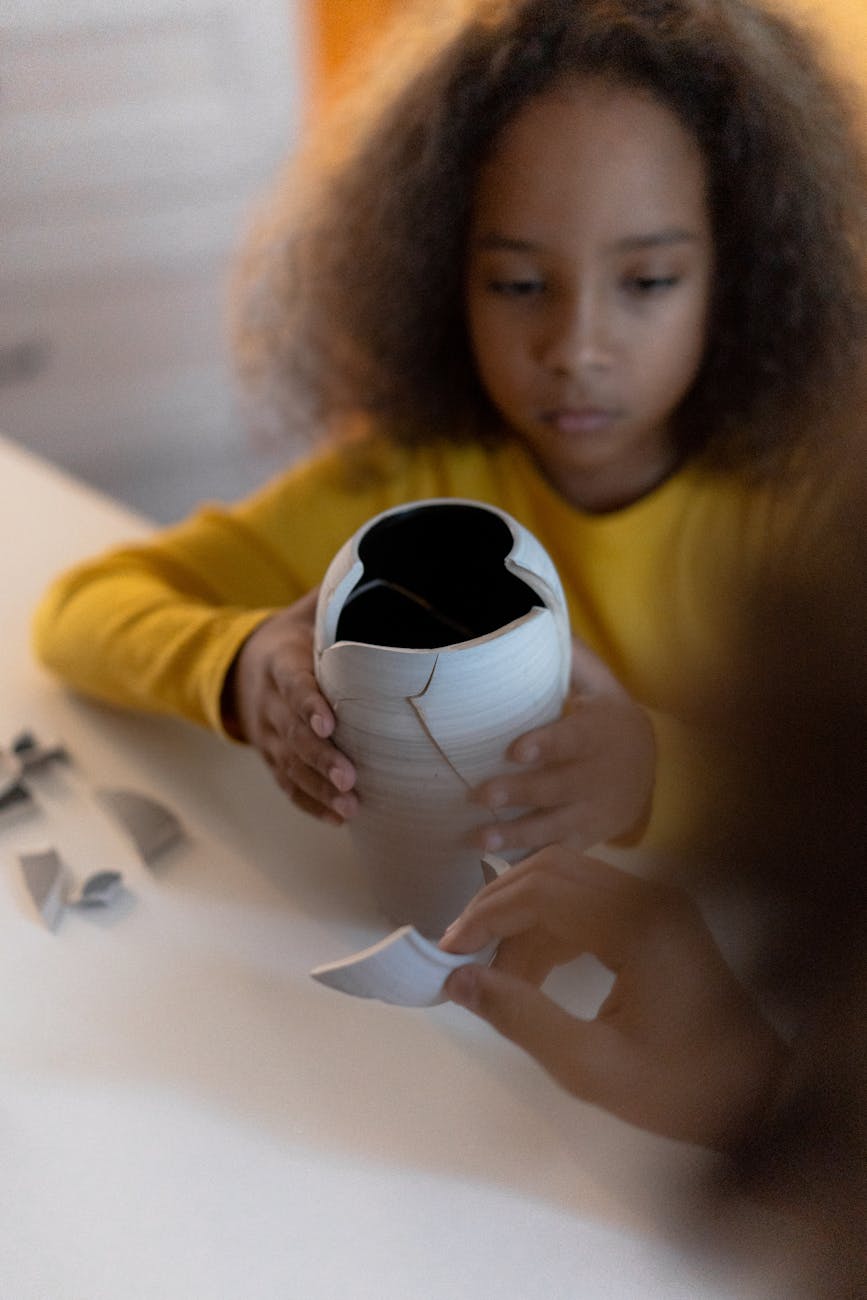
by Kathryn Breckenridge and Special Guest Writer Nika Marcum
For God, who said, “Light shall shine out of darkness,” is the One who has shone in our hearts to give the Light of the knowledge of the glory of God in the face of Christ. 2 Corinthians 4:6 (NASB20)
Crash! A glass shatters on the kitchen floor. As my husband sweeps up and disposes of the broken vessel, I groan in frustration. Another glass missing from the set.
I’m glad God doesn’t dispose of me when I’m damaged by failures, health issues, and by other’s unkindness. My Heavenly Father restores me and makes me new. He’s my Potter.
For the finale of the Clay in the Potter’s Hand series, welcome Nika Marcum with her reflection on God is the Potter. She explains God’s restoration of the broken by comparing it to Kintsugi, the Japanese art of fixing broken pottery. She gave her permission to share it with you.
God is the Potter.
I was thinking about this attribute last night. We think of the wheel and its spinning and we can picture God leaning over us with hands that fulfill His will, shaping us from the inside out. He makes no mistake unlike human potters (even masters mess up or start to experiment and guess at what their doing). We’re not toyed with but handled with one-of-a-kind care. As the clay, we’re tested and feel like we’re thrown for a ride or under immense pressure and pain. Poked, shaved, cut, warped, pushed, pressed, thrown down, spun, this way, now that way, and into the fire. It is often dreadfully prolonged suffering. These words are not necessarily pleasant, but all the while we are in careful, completely controlled, steady, loving hands. Maybe it’s more like a deep massage and you just gotta lay there. Tap taps won’t get the huge knots and toxins out. It’s a process that requires trust because we don’t see what He sees as Maker/Creator. We could have a dent or a weak area that could collapse or be prone to breakage later that He sees while we’re complaining “that’s enough!”. And even after all that shaping (maybe over and over and over again), He may make you into a pretty nice little bowl only to allow you to be chipped or shattered so He might do His wonders again. Picking up and perfectly placing the pieces together and maybe strategically leaving a couple pieces out to fill the cracks and gaps with precious lacquer and brushes of glittering gold. More beautiful and closer to our Father than ever before. A broken vessel is not the end and He will not do mediocre work. However, it will make a huge difference whether we see this as more pain, more bitterness or more beloved, more mercy, more gratitude. (This technique is called Kintsugi. Link to a short video below describing it better.)
I noticed in the video that the lacquer looks red like the blood of Jesus and it is highly precious and prized and takes the life of the lacquer tree when one cup of lacquer is extracted. The lacquer is its’ life-source, its’ “blood”. It parallels so well with how Jesus’ blood had to be shed and take his life to restore the broken vessels. I imagine that it’s just like Jesus who fills in all the cracks and cavities in my heart and makes my heart look beautiful with all the most wondrous colors shining brightly in my chest. I alone have a pretty unimpressive twisted heart, but Jesus is all the wonder, the glory, and the light.
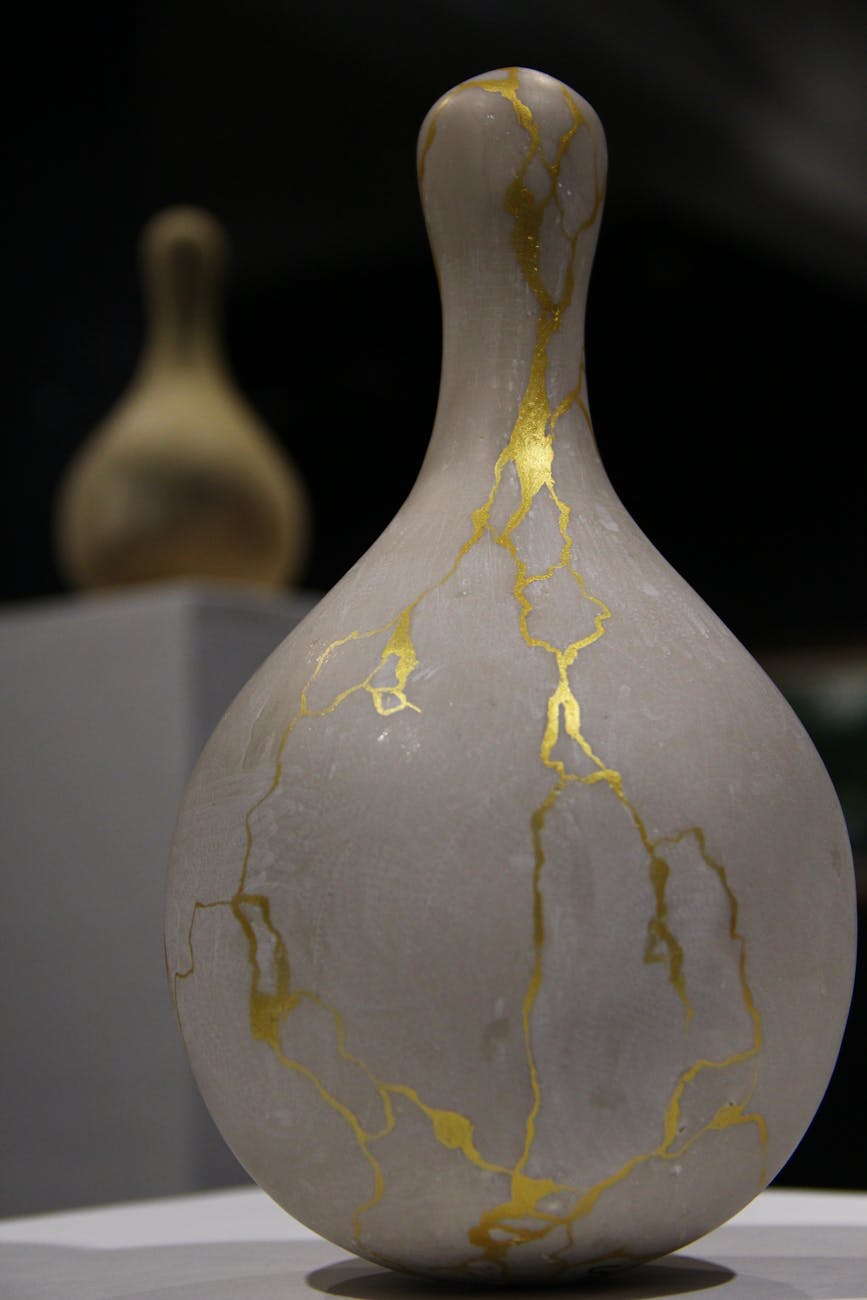
God the Potter made us to shine His light for His glory, as we’re told in 2 Corinthians 4.
But we have this treasure in earthen containers, so that the extraordinary greatness of the power will be of God and not from ourselves; 2 Corinthians 4:7 (NASB20)
How does God shine His light through you?
Kintsugi embraces the beauty of imperfection and the idea that flaws can make a piece of art stronger and more beautiful. It’s a way to treat breakage and repair as part of an object’s history, rather than something to hide.
Think of a time when you were broken. How did the Lord use it for good? How did He restore you? Rather than hiding it, how can the Lord use your brokenness and restoration to help others know Him?
Please share in the comments. I’d love to learn from you.
Dear Lord, Thank you for the gift of restoration. Please help me to shine for You. In Jesus’ powerful name. Amen.
###
Chi, Terusha. The Japanese Art of Fixing Broken Pottery (Kintsugi: Embracing the Imperfect). BBC Reel. BBC Global. August 5, 2020. 5:46 https://www.youtube.com/watch?v=r9LMKGte0UU
“Scripture quotations taken from the (NASB®) New American Standard Bible®, Copyright © 1960, 1971, 1977, 1995, 2020 by The Lockman Foundation. Used by permission. All rights reserved. lockman.org”
Top Photo of broken vase by cottonbro studio on Pexels.com

 Kathryn Breckenridge, author